Top 4 Cost-Effective Stripe Alternatives in 2026
Paying high fees and waiting days for cross border settlement makes surviving with cash flow harder for freelancers, stores, and SaaS platforms. Traditional payment gateways and card processors pile on hidden charges, lock you into subscription minimums, and slow fund access across currencies. This overview covers pricing, settlement speed, and integration options for four alternatives so you can match a cost effective fit to your business needs.
Table of Contents
LFG
At a Glance
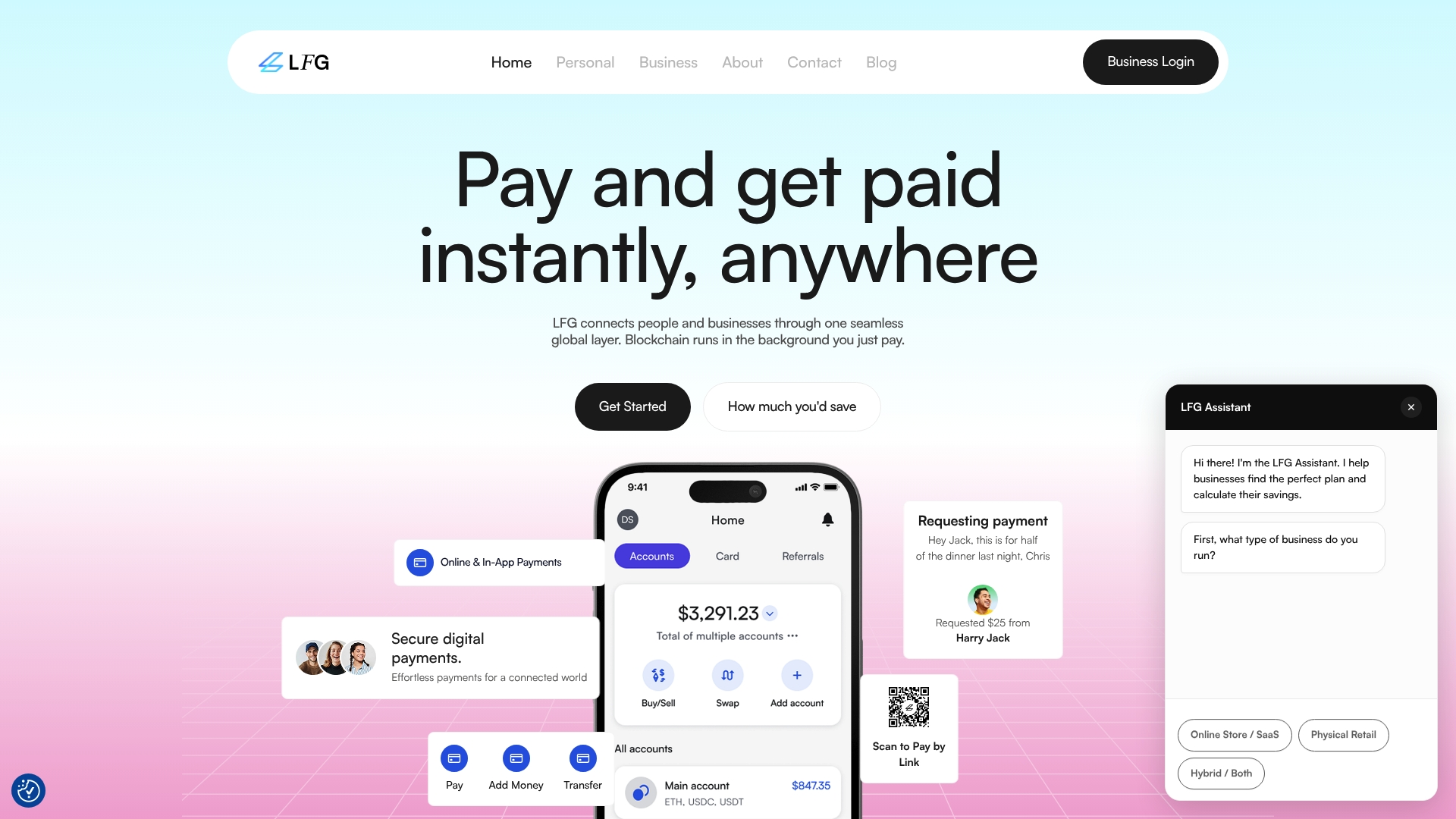
Blockchain-based transaction layer settles payments instantly across borders without custody of funds. The platform accepts both cryptocurrency and fiat for in person, online, and cross border payments. According to the company, clients report significant reductions in transaction costs and faster access to cash than with traditional processors.
Core Features
LFG supports in person sales, ecommerce checkouts, and cross border transfers while using a blockchain-backed, custody free transaction layer that posts settlements quickly. The platform offers payment links for direct requests and ecommerce integration, plus security measures such as 24/7 monitoring and basic compliance checks. The product emphasizes easy integration and a user friendly interface for stores and developers.
Key Differentiator
The standout technical detail is the custody free blockchain settlement model that moves money instantly across jurisdictions and does not hold client funds. That design reduces the middleman steps found in correspondent banking and card rails and shortens the time between payment and usable funds.
Pros
LFG lowers apparent processing costs by removing traditional payment provider fees tied to card networks and correspondent banking. It supports both cryptocurrencies and fiat, so you can accept digital assets alongside standard payments. Instant settlement improves cash flow for stores and freelancers, and the vendor advertises predictable, transparent pricing without hidden charges, which simplifies forecasting compared with opaque fee bills.
Cons
Who It’s For
Freelancers, web3 startups, and small to medium retailers that need fast access to funds and want to accept crypto as well as fiat. It suits shops that want lower per-transaction costs and teams that can work with limited public integration docs. Larger enterprises that require audited third party connectors may need to verify fit before committing.
Unique Value Proposition
Instant settlement to your account balance without custody delays means you do not wait days for funds to clear. That speed improves daily cash flow for shops and lowers short term borrowing needs for seasonal sellers. For businesses that measure success by available working capital, the faster posted funds change how you manage inventory and payroll.
Real World Use Case
A retail shop added LFG at its point of sale to accept digital payments and payment links for phone orders. The shop posted sales to its account immediately after each transaction and reduced card processing fees compared with the prior credit card processor. That shift shortened cash conversion cycles for weekly payroll.
Pricing
Detailed plan pricing is not publicly listed. The vendor advertises a transparent fee structure without hidden charges, but you must request specific rates for volume tiers or enterprise arrangements.
Website: https://getlfg.app
Prahsys
At a Glance
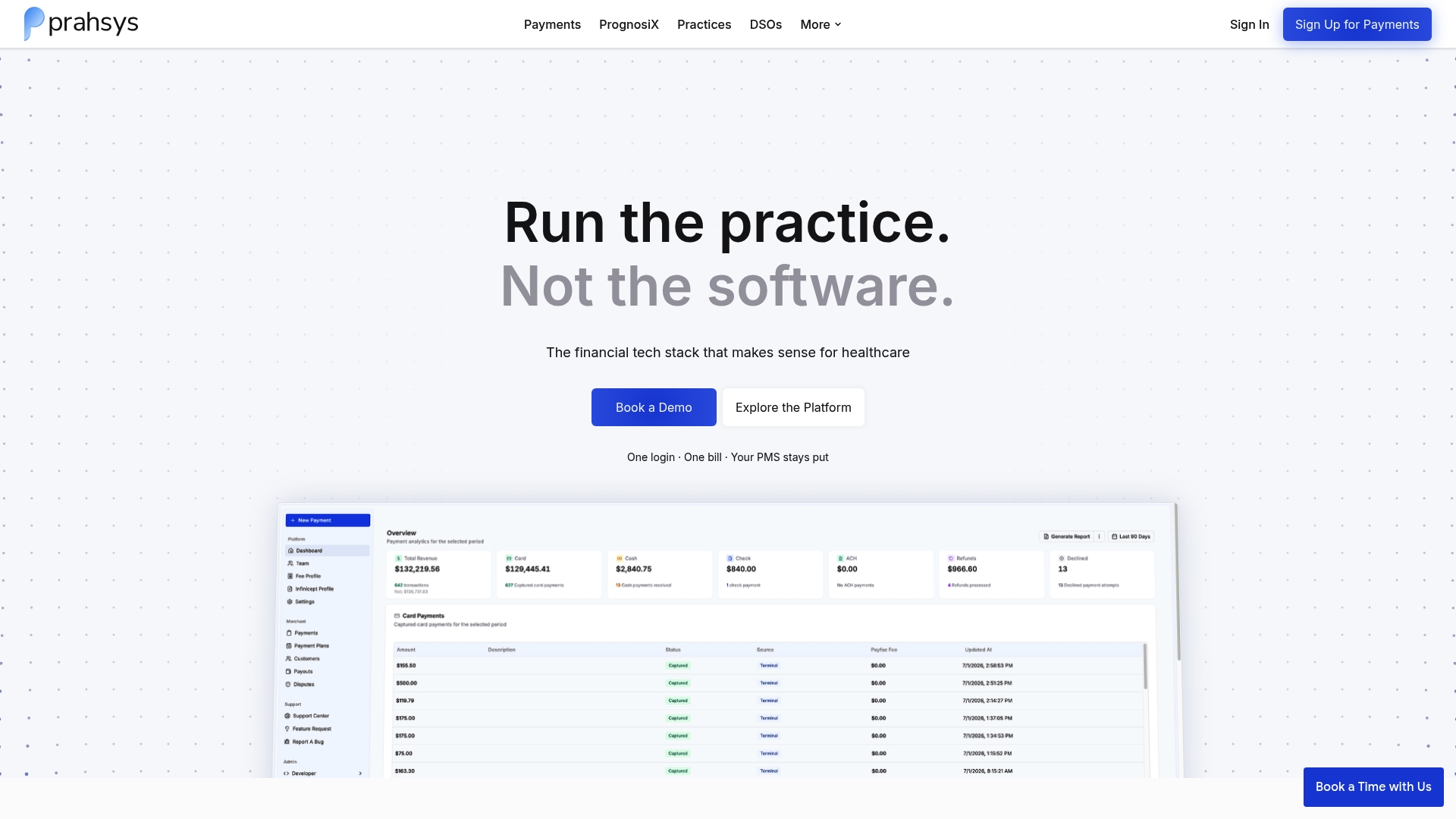
The vendor lists a processing fee of 2.49% + 49¢ per transaction. Prahsys pairs unified payments with an AI powered imaging suite called PrognosiX that supports 3D segmentation and clinical visualization. That combination targets practices that want one platform for billing and imaging rather than multiple vendors.
Core Features
Prahsys combines a unified payment processing system with a real time analytics dashboard that includes transaction monitoring and fraud detection. The platform includes the AI powered PrognosiX imaging tools for 3D segmentation and clinical views, and it offers APIs for embedding payments and imaging into practice management software. Prahsys’s marketing materials state HIPAA, PCI DSS, and SOC2 compliance, and the vendor describes a vendor neutral cloud infrastructure for large healthcare networks.
Key Differentiator
Prahsys centers on industry specific integration by marrying payments and imaging in a single stack. Its API first approach makes embedding both billing and diagnostic features into existing clinical workflows straightforward for engineering teams. That design favors software vendors and DSOs that want one partner for payments and imaging rather than stitching together separate services.
Pros
Consolidates billing and diagnostic workflows so practices reduce vendor count and administrative handoffs. The platform offers detailed documentation and white glove support that helps technical teams during integration. High customization lets engineering teams tailor the API first stack to specific practice management systems, and the real time dashboard gives finance leaders immediate visibility into transactions and potential fraud. The vendor emphasizes enterprise grade security and reporting that supports scaled healthcare operations.
Cons
When It May Not Fit
If your clinic runs on tight margins, that reported cost structure may rule Prahsys out. Practices without engineering support will struggle with the complex setup and API integration work. If you need fast, hands on support for day to day issues, reported variability in responsiveness could be a deal breaker.
Who It’s For
Prahsys fits dental clinics, medical imaging centers, DSOs, and healthcare software vendors that need an integrated payments and imaging platform. It works best for organizations with an engineering team or an integration partner. Larger practices that can absorb higher ongoing costs will see the most value.
Real World Use Case
A dental practice embeds Prahsys Payments and PrognosiX into its practice management system to link billing with imaging records. That setup reduces duplicate data entry and speeds patient check out. The practice also uses the dashboard to monitor chargebacks and to flag anomalous transactions.
Pricing
The vendor lists a per transaction fee of 2.49% + 49¢ and does not publish traditional subscription tiers. Ongoing costs and implementation expenses are commonly reported as significant factors in total cost of ownership. Ask for a detailed quote and integration estimate before committing.
Website: https://prahsys.com
SGW Payment

At a Glance
Local processing in every market drives SGW Payment’s routing logic and claims to improve approval rates for cross-border subscriptions. The platform ties that local footprint to a single API, so merchants do not rework integrations for each country. That setup also handles recurring billing, fraud alerts, and end-to-end reconciliation.
Core Features
SGW Payment exposes a single API that connects to multiple PSPs and acquirers, letting you route transactions without separate integrations per provider. It uses smart transaction routing and retry systems alongside recurring payment automation to raise success rates for subscription charges. The stack also bundles automated reconciliation, chargeback alerts, and secure card storage for financial operations.
Key Differentiator
The clearest distinction is the claim of local processing in every market combined with global connectivity through one API. That approach targets approval rates and compliance by processing payments locally where card schemes and issuers expect to see them. For subscription businesses expanding internationally, that single-API plus local routing model aims to reduce fragmentation in payments infrastructure.
Pros
SGW Payment groups multiple providers under one integration, which reduces engineering overhead when you expand into new countries. The platform includes automated reconciliation and real-time analytics to help finance teams close books faster and spot revenue leakage. Its fraud protection and chargeback alerting help subscription businesses protect recurring revenue without adding separate vendors. Local processing and multi-merchant ID volume distribution lower dependence on a single scheme, which can lift approval rates in tricky markets.
Cons
When It May Not Fit
If your business requires 24/7 phone support and guaranteed rapid escalation, SGW Payment’s reported communication gaps may pose a risk for mission-critical flows. If you run a merchant ecosystem that relies on out-of-the-box connectors to dozens of niche gateways, the lack of a public integrations list may slow rollout. Smaller merchants without dedicated payments ops may find the platform’s global focus more than they need.
Who It’s For
This product fits online subscription businesses moving into multiple countries and currencies and needing local processing to maximize approval rates. It suits teams that can manage a centralized payments orchestration layer and that value reduced provider lock-in. Larger SMBs and growth-stage SaaS firms with recurring revenue will get the most from the routing and reconciliation features.
Real World Use Case
A SaaS provider that expands into Europe and Asia uses SGW Payment to route cards to local processors and distribute volume across merchant IDs. The merchant sees fewer false declines and centralizes dispute handling and reconciliation into one workflow. Finance and payments teams trade multiple reconciliation scripts for a single reporting view.
Website: https://sgw-payment.com
Tilled PayFac-as-a-Service
At a Glance
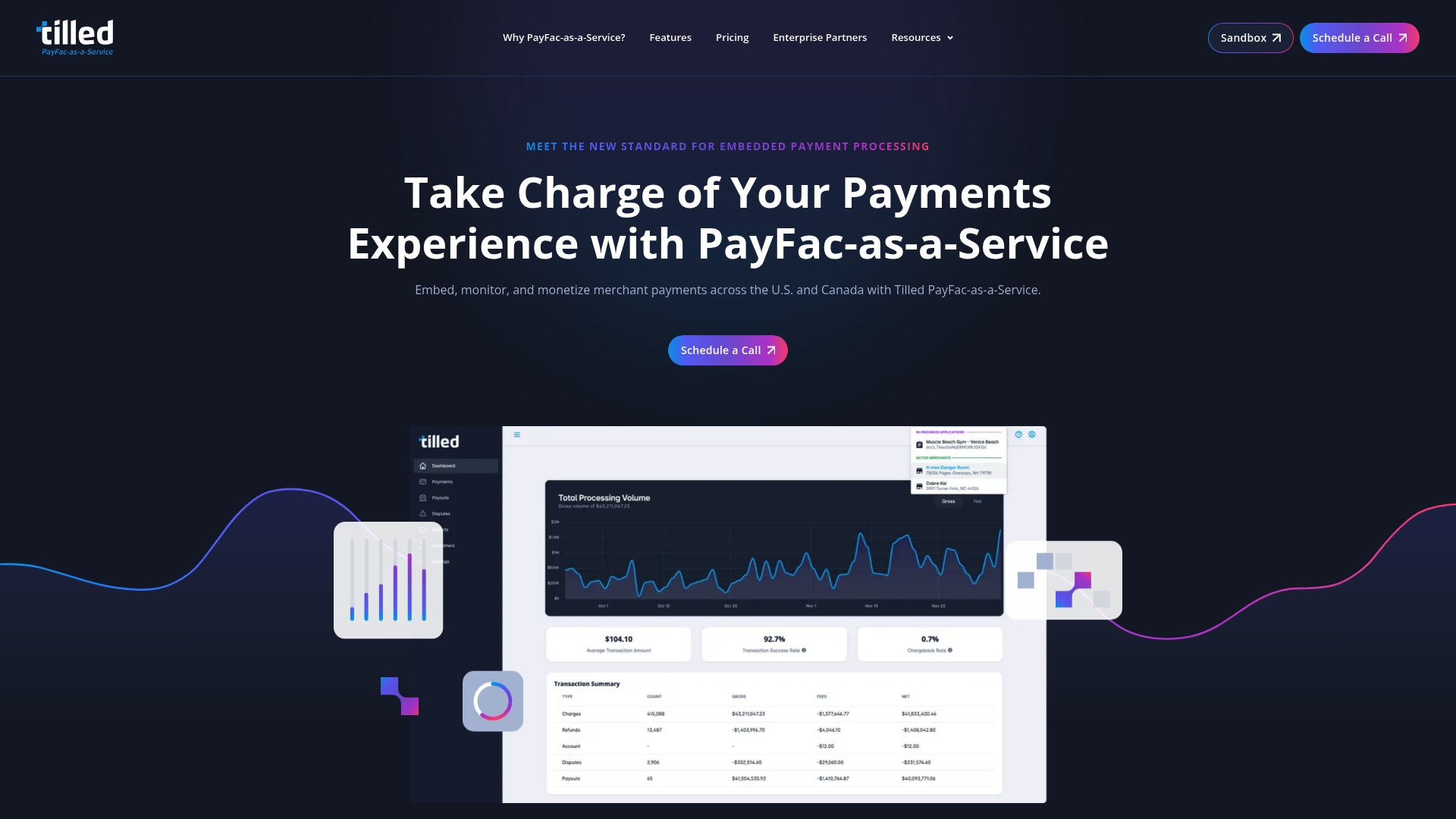
Starts at $500/month for the Start-Up tier, which covers platforms processing less than $5M per month. Tilled is PCI Level 1 compliant and supports merchant processing across the U.S. and Canada, including French language support in Canada. The platform bundles merchant onboarding, dispute handling, and unified reporting into a single developer-facing stack.
Core Features
Tilled offers a developer friendly API that lets platforms embed payment acceptance and manage the merchant lifecycle from onboarding to reconciliation. The product supports in person card processing, virtual terminals, subscriptions, surcharging, and omni channel reporting. Partners can deploy a white label experience and get real time transaction data for reconciliation and merchant performance tracking.
Key Differentiator
Tilled stands out for its combination of white label capabilities and cross border support coupled with full lifecycle management tools and a developer focused API. That mix helps software platforms deliver branded payments while reducing the integration and operations work of running a facilitator program.
Pros
Tilled emphasizes pricing transparency and a clear commercial model that helps partners forecast margin. Its API and lifecycle tooling reduce development time and centralize onboarding, dispute workflows, and reconciliation in one place. White label controls let platforms keep merchant branding and user flows inside their product while the vendor handles bank relationships and compliance. Real time data and unified reporting make monthly close and merchant support faster.
Cons
Who It’s For
Software companies, SaaS platforms, and payment service providers that want to embed acceptance under their own brand and manage merchants across the U.S. and Canada. It fits teams that can allocate engineering time to integrate APIs and who prefer the facilitator model over managing multiple acquirers.
Real World Use Case
A subscription SaaS product adds Tilled API to accept payments directly in its dashboard, use automated onboarding to bring merchants live faster, and surface real time transactions for its support team. The platform retains merchant branding while collecting a revenue share on processing income.
Pricing
Pricing starts at $500/month for the Start Up tier for platforms processing less than $5M per month and $2,500/month for Scaling for platforms processing more than $5M per month. Revenue share models run approximately 70–80% for standard tiers, with enterprise partnership options that include higher SaaS fees and revenue shares up to 95%.
Website: https://tilled.com
Comparison of alternatives
For businesses evaluating payment processing platforms, understanding the strengths and limitations of each option ensures informed decision-making when facing unique operational needs.
Customization versatility in payment technology
Tilled PayFac-as-a-Service and SGW Payment lead in enabling merchants to deliver tailored and branded payment experiences. Tilled’s developer-focused approach offers a white-label option, ensuring platforms maintain a cohesive brand image with full merchant management control through user-accessible APIs. SGW Payment combines global coverage with intelligent routing, aiding businesses tackling cross-border subscription challenges by raising transaction success rates.
Immediate fund access and operational clarity
Getlfg.app stands out by providing instantaneous money settlements without fund custody, reducing dependencies present in traditional banking systems. This custody-free, blockchain-based operation benefits businesses needing fast cash flow and a secure environment for cryptocurrency usage. However, Prahsys excels at offering unified platforms for clinical organizations requiring billing and operational streamlining integrated into imaging systems—an ideal match for healthcare-oriented entities.
Best fit
Our pick
Getlfg.app’s custody-free blockchain-driven transaction settlement distinguishes itself by prioritizing operational liquidity and cost-efficient processes. Particularly well-suited for freelancers, retailers, and startups working with cryptocurrency or fiat, this platform changes financial operation benchmarks. Though businesses emphasizing technical integration for billing and compliance may forego getlfg.app for different features, a collective evaluation can highlight tailored benefits for scalable adoption.
Here is a comparative overview of payment processing platforms and their standout features.
ProductKey DifferentiatorBest ForPricingLimitationGetlfgCustody-free blockchain model with instant settlementFreelancers, small-medium retailersPrice not publishedLimited public API documentationPrahsysCombining payment and imaging into one stackLarge medical practices with engineering support2.49% + 49¢ per transactionHigh costs for smaller practicesSGW PaymentLocal processing for cross-border subscriptionsGlobal subscription-based businessesPrice not publishedCommunication gaps reported by usersTilled PayFac-as-a-ServiceWhite label payments with lifecycle managementSaaS platforms in U.S. and Canada$500/month (below $5M processing)Limited public information on integrations
Why Are Stripe Alternatives Gaining Ground for Faster, Cheaper Payments?
The payment world still relies heavily on old-school systems like correspondent banking and card rails that take days to clear money. That’s why many freelancers, small businesses, and retailers look for Stripe alternatives offering instant payment posting and clear fee structures. Getlfg solves this by using a blockchain-based settlement layer that moves funds instantly without holding custody. That cuts out middlemen and lowers processing costs — no more waiting for money to arrive or losing chunks to hidden fees.
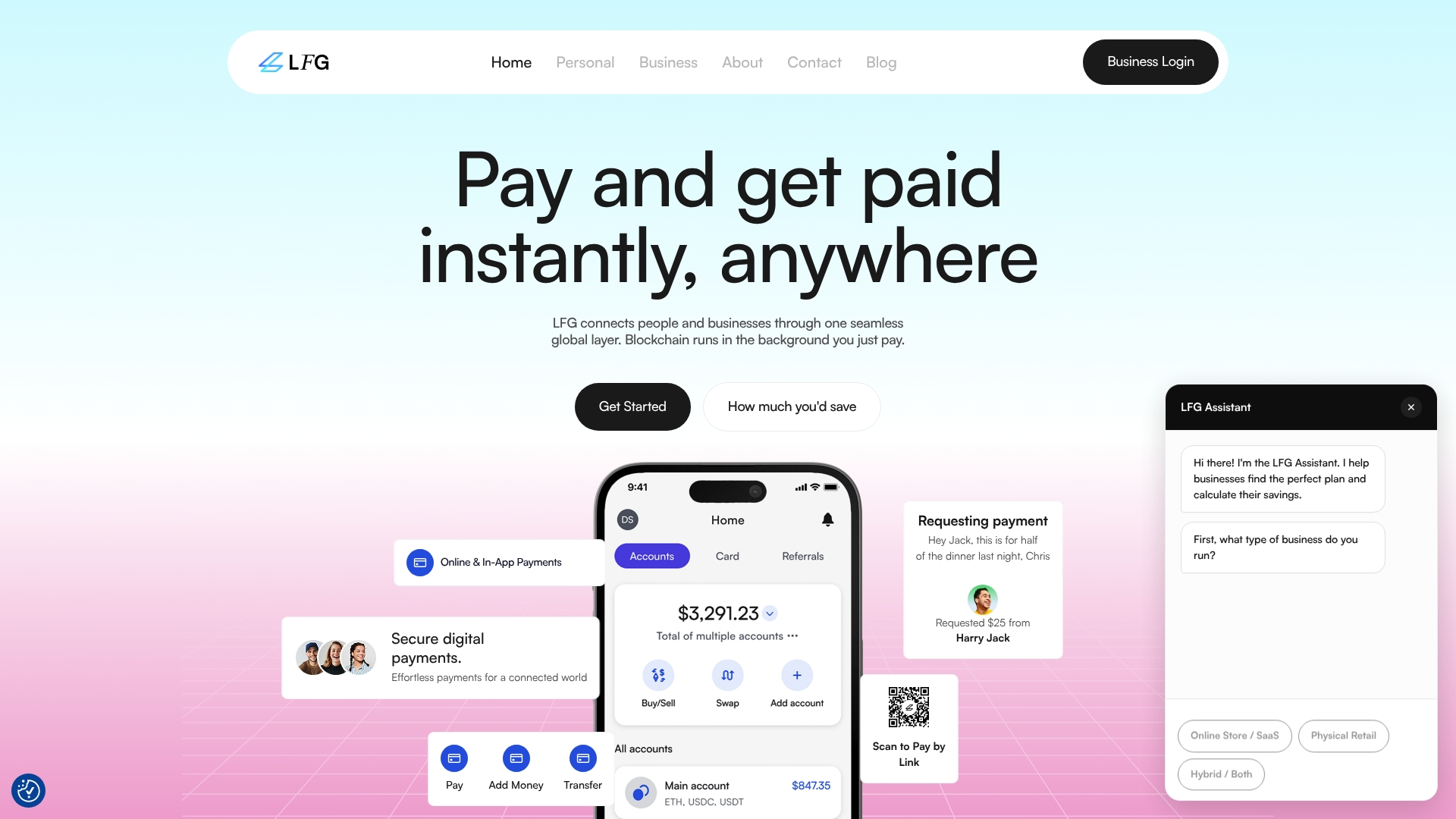
If reduced transaction costs and faster access to cash are your priorities, check out how Getlfg supports both fiat and cryptocurrencies with a user-friendly setup. Visit Getlfg for details and see how instant settlement to your account could boost your cash flow and simplify payment handling today.
FAQ
What advantages does Getlfg offer for cross-border payments?
Getlfg allows for blockchain-based transaction settlements that occur instantly and without custody of funds. This capability helps clients experience significant reductions in transaction costs and faster cash access compared to traditional processors. Businesses can expect improved cash flow and reduced operational costs when using Getlfg for cross-border payments.
How does Getlfg compare to Prahsys regarding payment integration?
Prahsys excels in providing an AI-powered imaging suite for medical practices looking for integrated solutions combining billing and imaging. Getlfg, on the other hand, is designed primarily for businesses needing fast access to funds from both cryptocurrency and fiat transactions. This makes Getlfg a better fit for freelancers and small to medium retailers focused on swift financial operations.
Which type of businesses benefit the most from using Getlfg?
Freelancers and small to medium retailers are the primary beneficiaries of Getlfg. It allows them to accept both cryptocurrencies and fiat with fast access to funds, enhancing their cash flow. This is particularly appealing for those looking to reduce per-transaction costs associated with traditional payment processors.
Does Getlfg support in-person payments?
Yes, Getlfg supports in-person sales alongside online and cross-border transactions. This flexibility means businesses can adapt their payment acceptance strategy across various channels, improving the overall customer experience. It is an essential option for retailers aiming to maximize sales opportunities.
What fee structure does Getlfg follow?
While specific plan pricing is not publicly listed, Getlfg offers a transparent fee structure without hidden charges. This approach simplifies forecasting for businesses, allowing them to better manage their financial operations and costs when using the platform.
Recommended


You Might Also Like
Check out more posts that explore the future of payments and fintech solutions